Italian Polenta
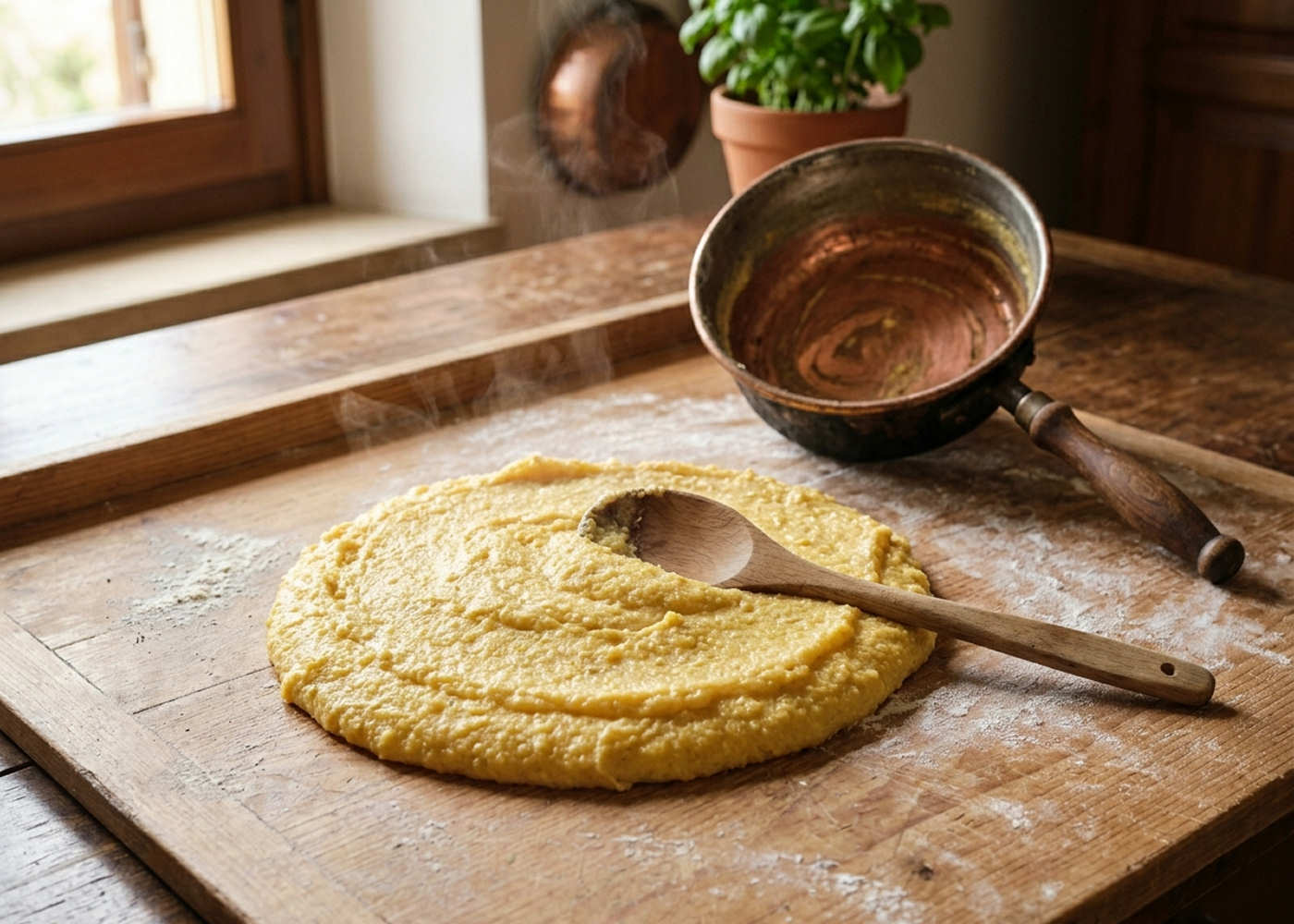
Discover how to make traditional, creamy Italian polenta from scratch. With just cornmeal, water, and salt, our easy step-by-step guide shows you how to perfect this Northern Italian comfort food. Perfect on its own or paired with rich winter stews!
Step-by-Step Instructions
- Pour the water and coarse salt into a medium-large pot (with at least a 3-liter / 3-quart capacity) and bring it to a rolling boil over high heat.
- Slowly pour in the cornmeal in a thin, steady stream (a pioggia) while whisking vigorously to prevent lumps from forming.
- Reduce the heat to low and let it cook for about 1 hour, stirring frequently, until the polenta starts to naturally pull away from the sides of the pot.
... and now, let's enjoy!
Additional Info:
The history of modern Italian polenta began after the discovery of the Americas, which led to the introduction of corn (maize) to Europe. It became incredibly popular across Northern Italy, particularly in the Veneto and Lombardy regions. As an affordable crop with a high satisfying power, cornmeal became a fundamental staple of the local diet for centuries.
Substitutions & Variations
There are several popular variations of polenta made with different types of flour. Beyond the classic yellow polenta, you can find white polenta or buckwheat versions, often paired with cheeses, mushrooms, meats, or rich traditional sauces.
-
Polenta Taragna: A typical tradition from the Valtellina valley, where buckwheat flour is mixed with cornmeal, and plenty of butter and local melting cheeses are folded in at the end.
-
Polenta Concia: A rich specialty from Valle d’Aosta and Piedmont, heavily enriched with melted butter and Fontina cheese.
-
Polenta di Patate: A comforting variation from the Trentino region that includes mashed boiled potatoes mixed directly into the polenta.
Serving Suggestions
Polenta is the ultimate comfort food for cold autumn and winter days. It pairs beautifully as a base for hearty stews, wild mushrooms, sausages, and melted cheeses, but it can also be enjoyed entirely on its own to appreciate its simple, wholesome flavor.