Eggs Florentine (Uova alla Fiorentina)
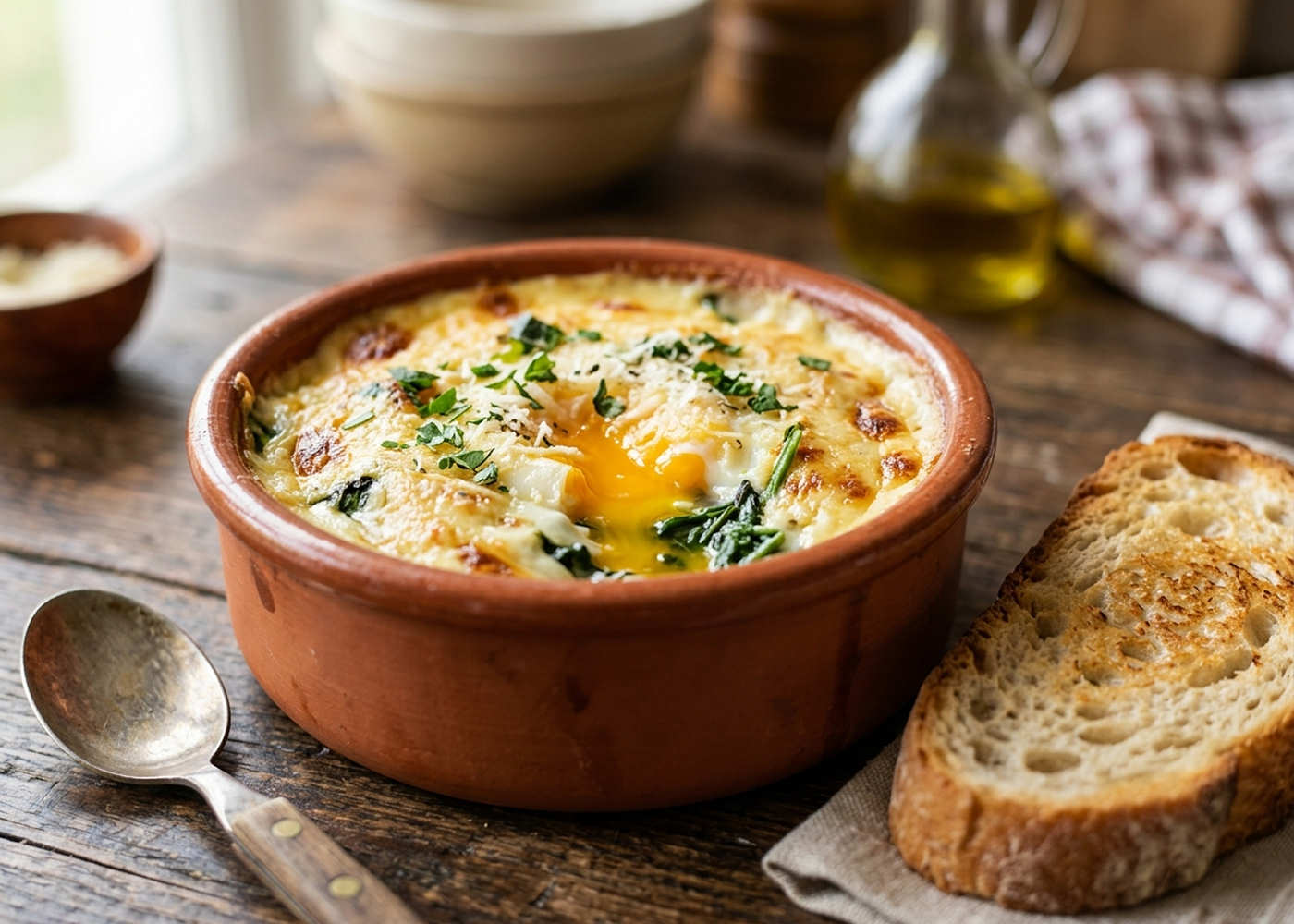
Ever heard Eggs Florentine credited to the French? The real version comes straight from Florence: fresh spinach nestled in ramekins, a whole egg cracked on top, blanketed in creamy Parmesan béchamel, and baked until golden — simple, rustic, and unmistakably Tuscan.
Step-by-Step Instructions
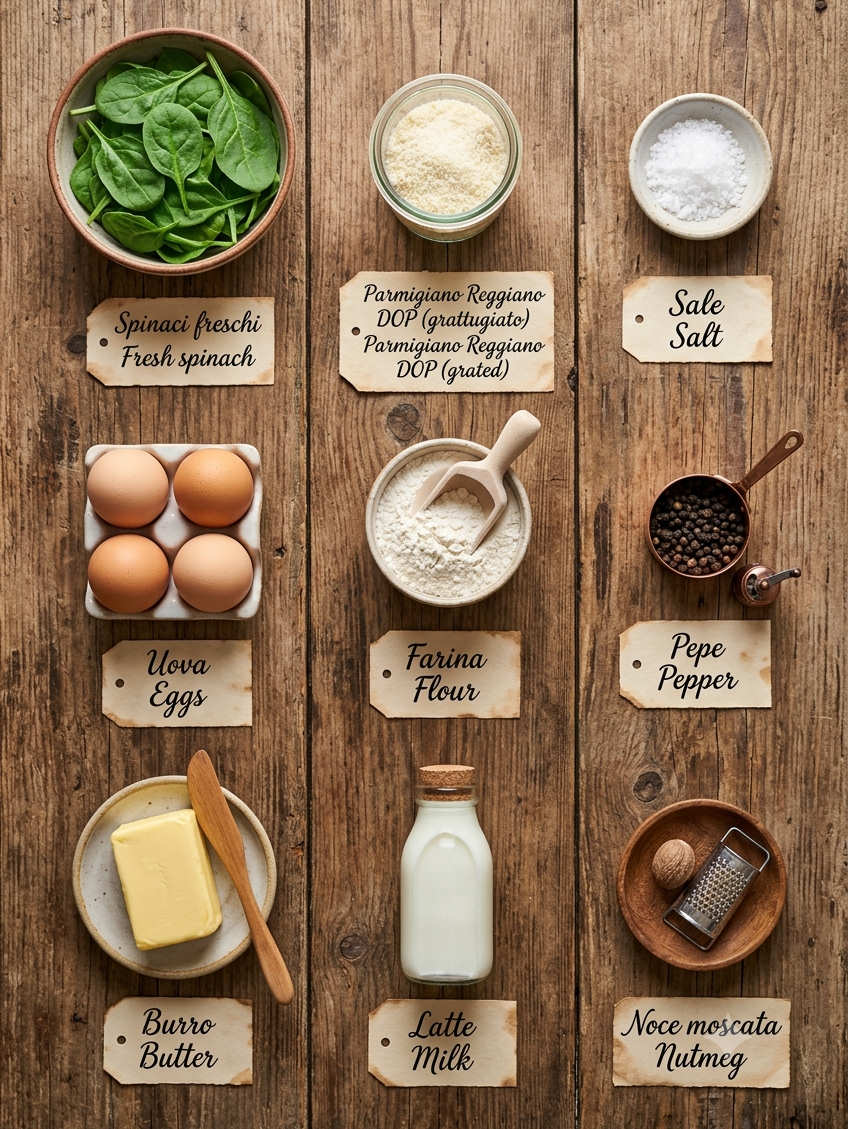
- Wash and clean the spinach, then boil for about 10 minutes.
- Drain, squeeze out the excess water thoroughly, and roughly chop.
- Sauté the spinach in a pan with half the butter and a pinch of salt for a few minutes.
- Melt the remaining butter with the flour over low heat to start the béchamel.
- Stir in half the grated Parmigiano Reggiano, then add the milk a little at a time, whisking constantly.
- Season with salt, pepper, and nutmeg, and cook until the sauce is thick and creamy.
- Butter individual ramekins or a baking dish and spread the spinach on the bottom.
- Make small wells in the spinach and crack one egg into each.
- Season the eggs with salt and pepper, then cover with the béchamel.
- Top with the remaining Parmigiano Reggiano.
- Bake in a preheated static oven at 400°F (200°C) for 15–20 minutes.
- For a more golden top, broil for a few extra minutes.
- Serve hot.
... and now, let's enjoy!
Additional Info:
Eggs Florentine is often assumed to be a French invention — the classic dish of eggs, spinach, and a creamy Mornay sauce popularized by Escoffier’s kitchen in the late 19th century, which is why “à la Florentine” still means “with spinach and a rich sauce” in French cuisine to this day. The dish actually eaten in Florence, however, is simpler and older in spirit: eggs baked directly into a bed of sautéed spinach, finished with butter and Parmigiano rather than a heavy Mornay sauce. Uova alla Fiorentina reflects Tuscany’s cucina povera tradition — turning humble, inexpensive ingredients like eggs and spinach into a full, satisfying dish.
Substitutions & Variations
Regional and family versions add cooked ham or pancetta for a richer flavor, or replace the béchamel with cream or a softer, creamier cheese. Some cooks use quail eggs instead of chicken eggs for smaller, more refined portions — a popular choice when serving the dish as an elegant antipasto rather than a main course.
Serving Suggestions
Serve eggs Florentine hot, straight from the oven, in the same ramekin or baking dish they were cooked in. They work well as a one-dish meal with crusty bread for scooping up the béchamel, or as a starter within a traditional Tuscan menu alongside a light side dish.