Lasagna Bolognese
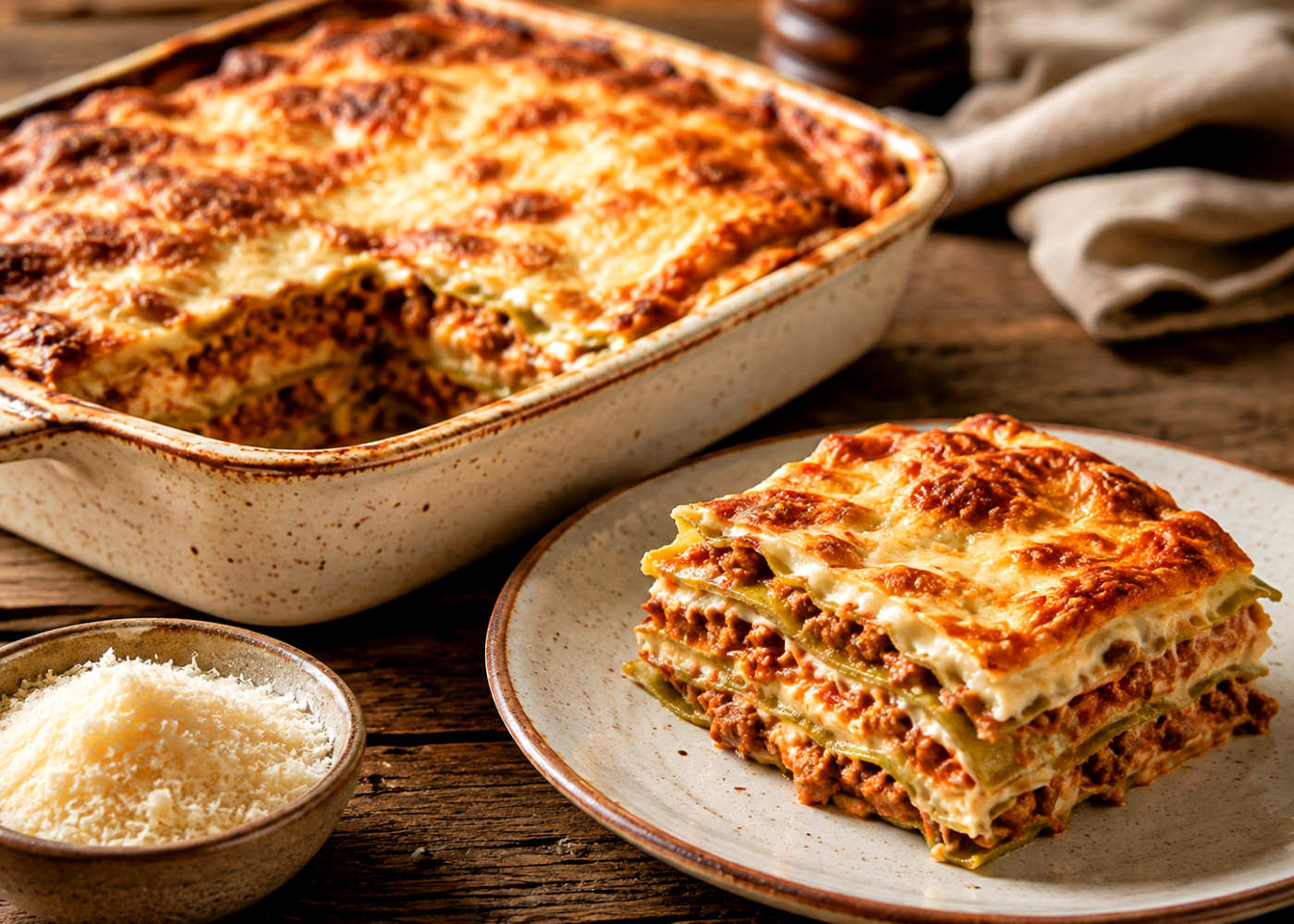
Is there a more comforting Sunday dish than real Lasagna Bolognese? Layers of hand-rolled green spinach pasta, slow-simmered meat ragù, and silky béchamel come together in Bologna's most iconic baked pasta — rich, deeply savory, and worth every one of the six hours it takes.
Step-by-Step Instructions
- Wash and finely dice the carrot, celery, and onion.
- Heat the olive oil in a large pan over medium heat and add the diced vegetables.
- Add the pancetta and ground beef; cook until browned.
- Deglaze with the red wine and let it evaporate.
- Stir in the tomato passata, tomato paste, and vegetable broth.
- Simmer the ragù over low heat for about 2 hours.
- Meanwhile, wash the spinach and cook briefly in a little water.
- Drain the spinach and blend it into a smooth purée.
- In a bowl, knead the semolina, flour, eggs, egg yolks, and spinach purée into a smooth, homogeneous dough.
- Cover the dough and let it rest for 30 minutes.
- Roll the dough out thinly with a pasta machine or rolling pin into sheets about 4×6 inches (10×15 cm).
- For the béchamel, melt the butter in a saucepan over low heat, without browning it.
- Add all the flour at once and whisk immediately to form a smooth roux; cook for a few minutes until lightly golden.
- Gradually add the warm milk, whisking constantly to prevent lumps, until the sauce thickens.
- Season the béchamel with salt and nutmeg.
- In a baking dish, alternate layers of pasta sheets, ragù, and béchamel.
- Finish the top layer with ragù, béchamel, and a generous amount of Parmigiano Reggiano.
- Bake until the top is golden.
- Let the lasagna rest for a few minutes before serving.
... and now, let's enjoy!
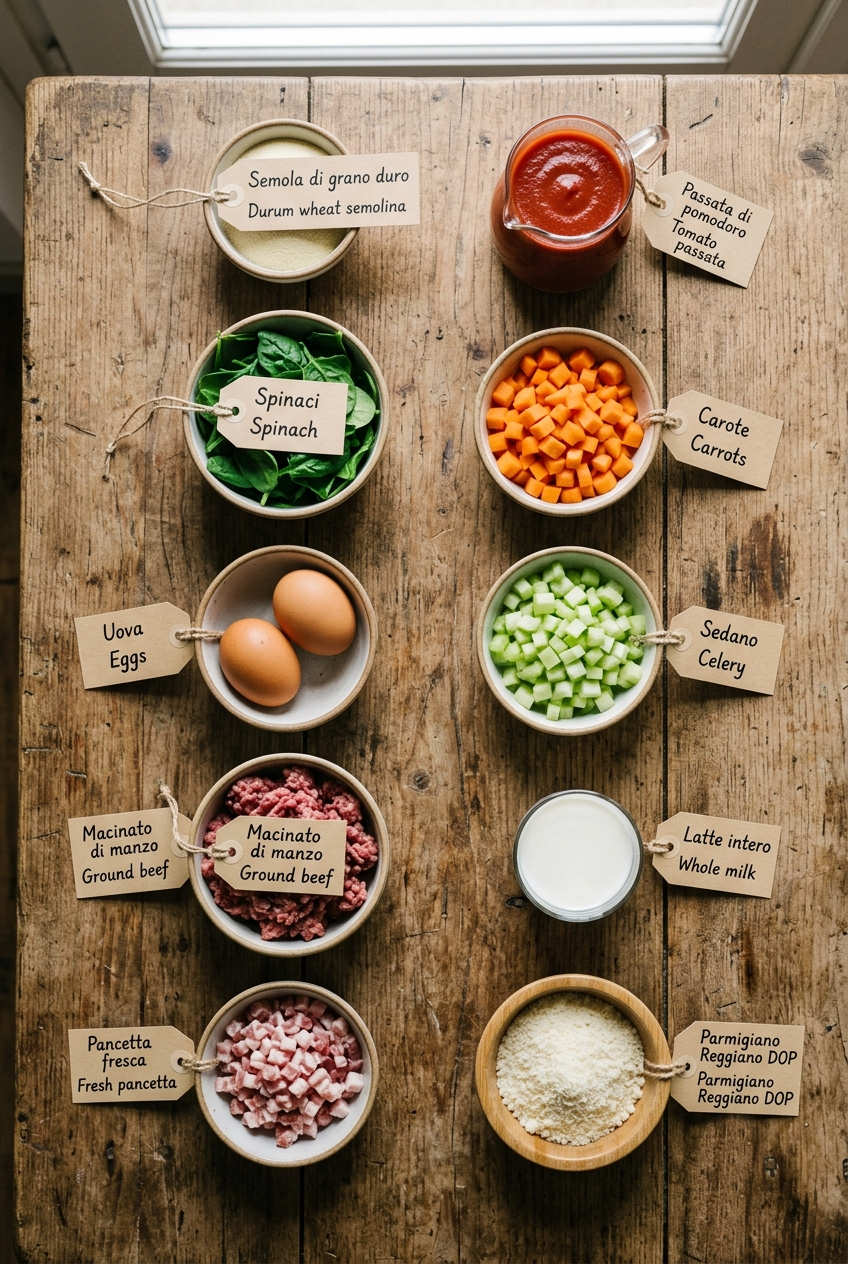
Additional Info:
Lasagna is one of the oldest dishes in Italian cooking, with its roots tracing back especially to Emilia-Romagna. The most famous version, alla bolognese, is tied directly to the culinary tradition of Bologna, built on the pairing of slow-cooked ragù and béchamel — a combination that became the template for the dish nationwide.
Substitutions & Variations
There’s no single “correct” lasagna. Regional and family versions swap the ragù for vegetables, mushrooms, or fish, and some areas skip tomato entirely for a white, tomato-free filling. The pasta itself varies too — plain egg pasta in some households, spinach-green sfoglia in others, and richer, more elaborate fillings depending on the region.
Serving Suggestions
Lasagna is traditionally served as a primo for Sunday lunch or special occasions. It’s best eaten hot but not piping — letting it settle slightly brings the flavors into better balance and keeps the layers stable when plated.


